· By Petus AI
How to read your pet’s blood test results
The report is two panels, the vet reads patterns not soloists, and a value can be normal while the trend does the talking. Enough understanding to read along calmly.
Your vet hands you two pages of abbreviations, says "mostly fine, liver's a little up, we'll recheck in a month", and by the time you're home you couldn't repeat a word of it. The internet then makes it worse, because a table of reference ranges without context is an anxiety machine. This is the middle path: enough understanding to read the report calmly, without pretending to replace the person trained to interpret it.
The report is two panels
Nearly every routine bloodwork is a CBC plus a chemistry panel, and they answer different questions.
The CBC counts cells. Red cells, haemoglobin and haematocrit carry oxygen: low suggests anaemia, high often just means dehydration. White cells are the immune system: up with infection, inflammation and plain stress, down with some viral illnesses. Platelets are the clotting crew, and the number a vet wants right before any surgery.
The chemistry panel eavesdrops on organs. ALT, ALP and bilirubin are the liver group, and mild elevations are so common in middle-aged dogs that "the liver's a little up" is arguably the most-spoken sentence in veterinary medicine. BUN and creatinine (plus SDMA, which moves earlier) are the kidney group. Glucose is blood sugar, famously spiked by nothing more than a stressed cat in a carrier. Total protein and albumin track hydration and gut or kidney losses, and the electrolytes are the body's balance chemistry.
How a vet actually reads it
Not value by value. Ranges first: every lab prints its own, so a number is only "high" against the range beside it. Magnitude second: ten percent over the line and five times over the line are different conversations, and small excursions in a healthy dog are usually rechecked, not treated. Then patterns: BUN, creatinine and SDMA move as a group or they don't; one flagged soloist with a normal supporting cast is usually a shrug. Context throughout, because a sighthound runs a high haematocrit, a puppy runs a high ALP from growing bone, and an unfasted breakfast moves half the panel.
And above everything: trends beat snapshots.
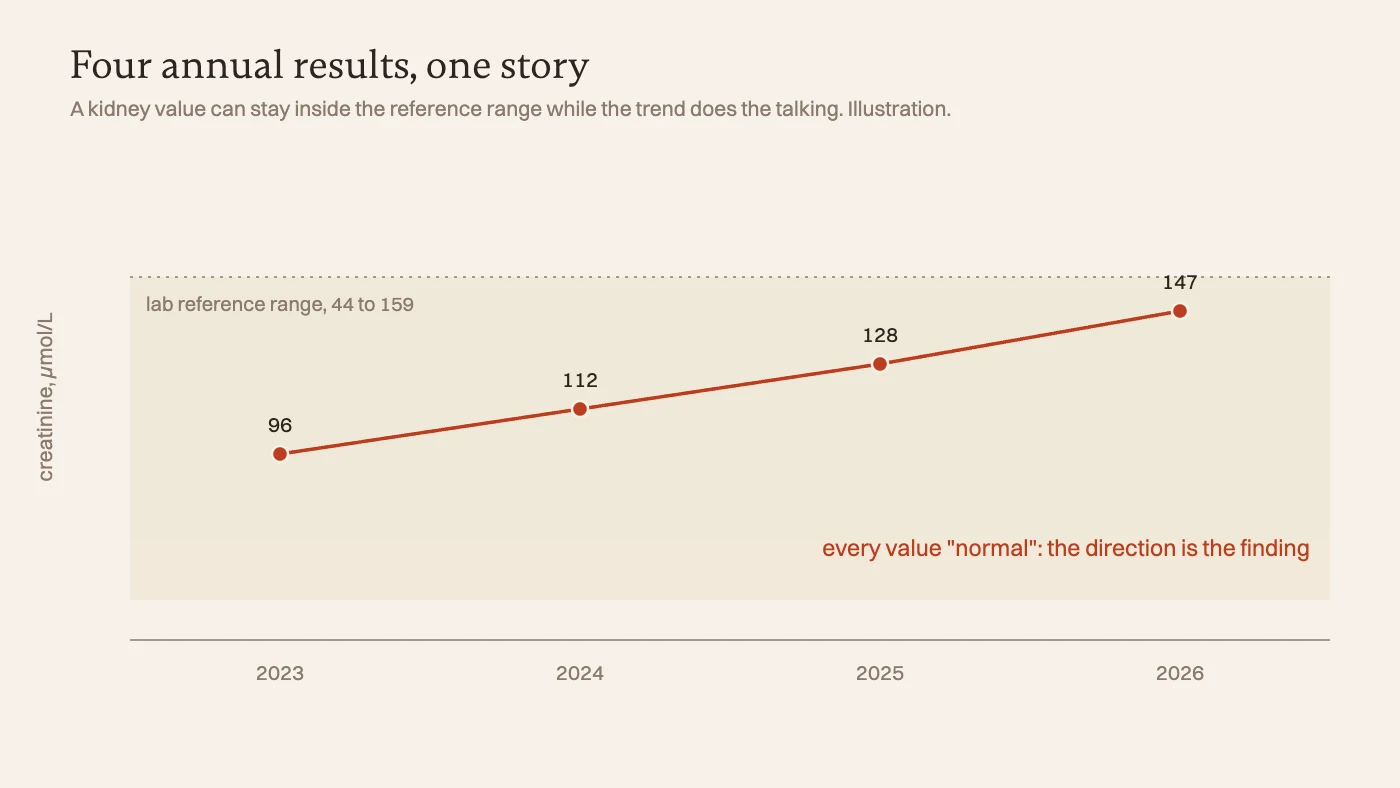 Three annual results, every one inside the reference range. The value is normal. The direction is the finding.
A creatinine that has climbed steadily across three annual tests while staying "in range" says more than a single value just over the line, and it is precisely the thing a one-off test can never show. This is the strongest argument for annual bloodwork on healthy pets: you're not looking for disease, you're buying a personal baseline that makes every future test smarter. If your pet's results live in Petus, this happens by itself: upload the report (a photo of it is fine) and each value lands on its own trend line next to weight and symptoms, so the drift is visible years before the flag.
Questions worth asking at the recheck
This is one consult where arriving with questions changes the outcome, so: which values are you watching, and what pattern would worry you? Is this a recheck-in-a-month finding or a treat-now finding? Could stress, food or a medication explain it? And what was this value last year? If the answer to the last one is a shrug, that is the baseline argument making itself.
A repeat test in four to six weeks after a mild unexplained elevation is standard practice, not a sign something was missed. The report is written for clinicians; with the structure above you can at least read along, remember what was said, and ask the question that matters. Interpreting it, deciding what it means for treatment, stays your vet's job, and the best outcomes come from the two of you reading the same page.