· By Petus AI
The elimination diet trial, done properly
The most powerful diagnostic an owner can run at home, and the most commonly botched. One diet, eight strict weeks, an honest verdict, and the re-challenge that proves it.
Most food trials fail before they start. The owner switches food "to see if it helps", keeps the old treats because they're nearly finished, forgets exactly which week the switch happened, and eight weeks later nobody knows anything. The tragedy is that a properly run elimination trial is the single most powerful diagnostic an owner can run at home, and it costs nothing but discipline. Done right, it settles the question "is food behind this?" more reliably than most tests a clinic can sell you.
What a real trial looks like
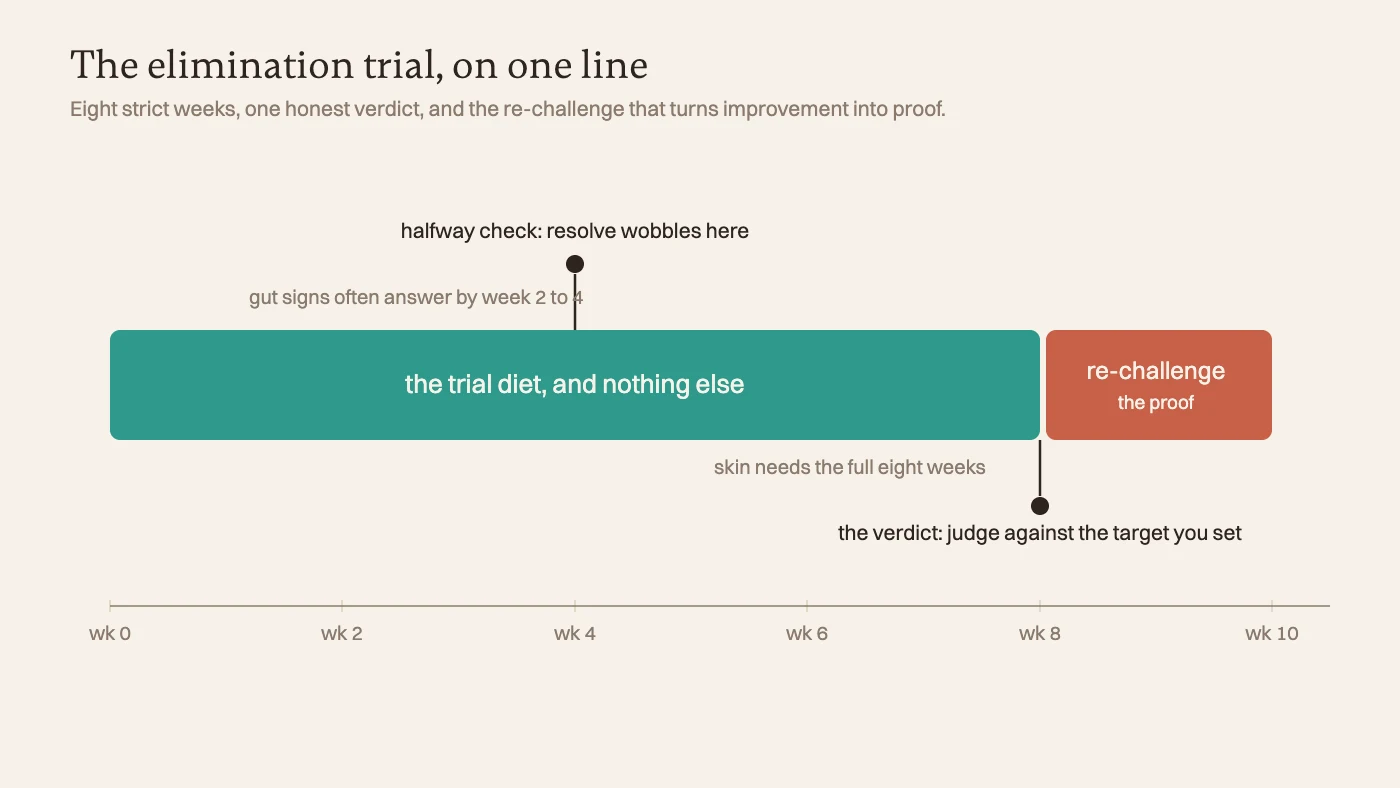 The whole protocol on one line: strict weeks, a mid-point check, the verdict, and the re-challenge that turns an improvement into proof.
Choose one diet, with your vet. Either a novel protein your pet has genuinely never eaten (which is harder than it sounds; check the fine print of every food you've ever fed, because "salmon and potato" kibbles have quietly introduced most pets to most proteins) or a hydrolysed prescription diet where the protein is chopped too small for the immune system to recognise.
Then that diet, and nothing else. This is the whole trial: the chosen food, water, full stop. The commonest wreckers are not meals but incidentals: flavoured worming tablets, dental chews, the training treats in your pocket, the toddler's floor, the neighbour who "only gave him a biscuit". One beef-flavoured tablet in week five restarts the clock. If something slips, note the date and keep going; a known slip is recoverable, an unknown one poisons the verdict.
Hold the line long enough. Gut signs usually answer within two to four weeks. Skin and ear signs are slower, and a dermatologist will ask for the full eight weeks before ruling food out. Marking the halfway point matters psychologically: that's where resolve wobbles and where a check-in catches drift.
Then judge honestly, and prove it. If nothing changed by the deadline, food probably isn't the story, and that's a real answer that saves you months of rotating bags. If things improved, the tempting move is to celebrate and change nothing. The rigorous move is the re-challenge: reintroduce the old food for up to two weeks and watch. If the signs come back, usually within days for the gut and up to two weeks for skin, you haven't just found a food that works, you've proven the sensitivity. If they don't come back, the improvement had another parent, time being the usual suspect.
Why trials die, and the fix
They die of vagueness: no fixed start date, no end date, no agreed target ("better" is not a target; "stool score 3 or firmer most days" is), and no record of what actually happened in week three. The fix is boring administration, which is exactly the thing Petus automates: tell it the trial food and the symptom you're watching, and it fixes the start date, sets the review date, nags you once when judgment day arrives, and records the outcome on the permanent record where the next vet, or the next trial, can see it. Completed trials become the rarest thing in veterinary history-taking: a labelled experiment instead of an anecdote.
One boundary worth stating: an elimination trial diagnoses food sensitivity. It is not a weight-loss plan, not a kidney diet, and not a substitute for a vet when the symptom is weight loss, vomiting blood, or a flat, sick animal. Petus will decline to help you improvise therapeutic diets for exactly this reason; those get designed with a professional, on purpose.