· By Petus AI
Chronic diarrhoea: the timeline your vet actually needs
Every GI vet asks the same first question: what changed, and when? Stool scores, food switches and antibiotic courses on one axis answer it better than memory ever will.

Every vet facing a dog with months of gut trouble asks the same question first: what changed, and when? And nearly every owner gives the same answer: "I'm not sure... maybe around spring?" It isn't carelessness. Nobody can hold eight weeks of stools, three food changes and a course of antibiotics in their head in order. But the order is exactly where the diagnosis lives.
One dog, eight weeks, one picture
Here's a story every GI vet will recognise, laid out the way memory never manages:
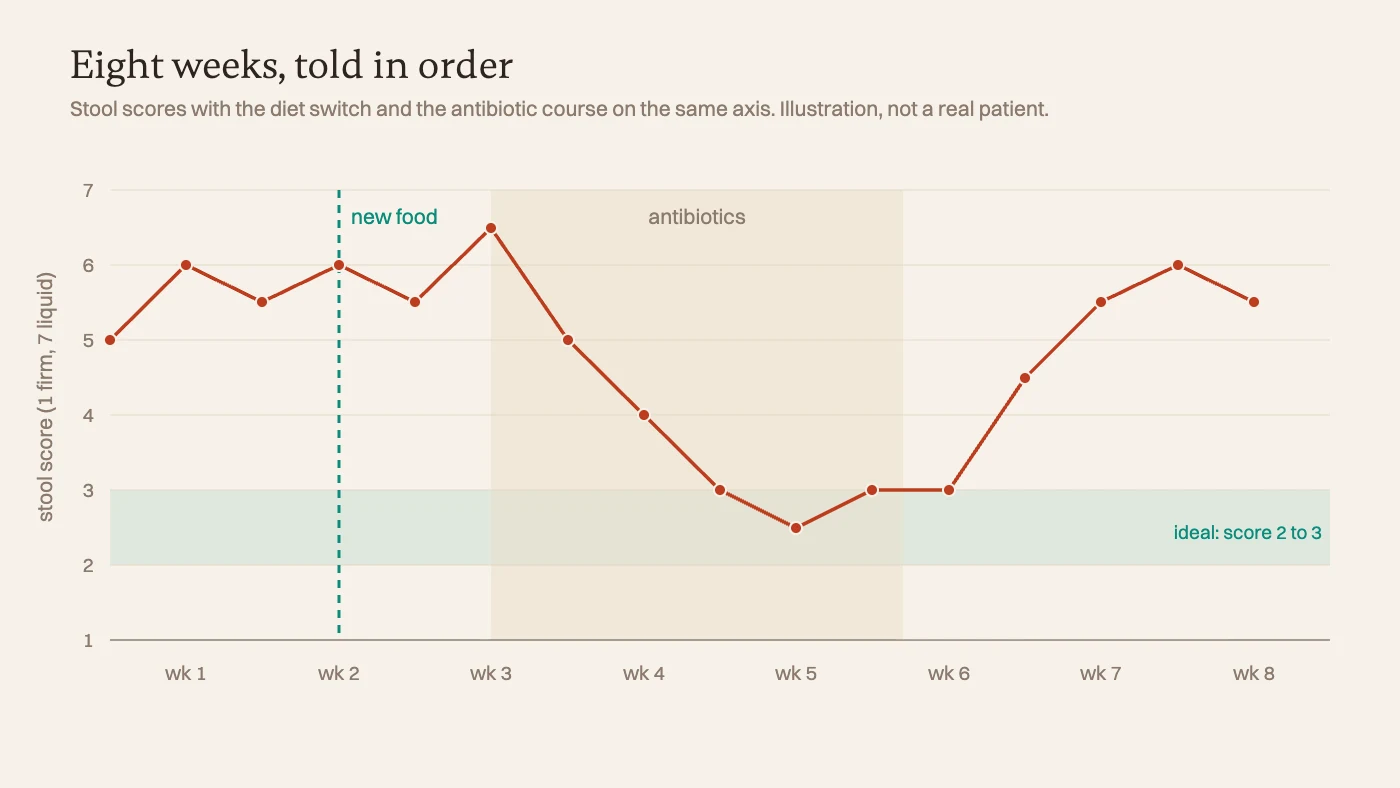 Eight weeks on one axis: stool scores, a food switch, a course of antibiotics. Told in order, the story reads itself.
Week one, soft stools begin, score 5s and 6s on the 7-point scale. Week two, the food ran out and the new bag was a different formula; nobody thought much of it. Week three, the vet visit: antibiotics. Weeks four and five, improvement, everyone relaxes. Week six, the antibiotics are finished and the scores drift straight back up.
Read as a list of bad days, this is just a sick dog. Read in order, it asks a sharp question: did the trouble start with that week-two food change, and did the antibiotics merely mute the symptom while the cause stayed in the bowl? That question, visible in one glance, is the difference between a third round of antibiotics and an elimination trial that might actually end the story. Gut bacteria take weeks to recover from a course of antibiotics, and a gut that only behaves while on them is a gut asking about its diet, not begging for more treatment.
Keeping the timeline without becoming an accountant
The trick is logging small and immediately, not thoroughly and never. Four things earn a place on the axis: stool, scored rather than described, because "a 6" survives three months better than "pretty bad"; appetite, since "barely touched dinner" three times in a week is a pattern, not a mood; every diet change, including the quiet ones, new bag, new formula, new treats, the switch to the senior version; and every medication with its start and end dates, antibiotics above all.
If you tell Petus these things as they happen, in passing, in plain sentences, it builds this timeline for you: photo a stool and it's scored onto the axis, mention the new food and the switch is marked, log the antibiotics and the course appears as a band. When the picture starts rhyming, trouble returning after each course, or starting after a switch, Petus says so out loud rather than leaving the pattern buried. And the part vets appreciate: if you share access before a consult, they see this chart, not a description of it. One caution it will always keep: Petus never tells you to stop a medicine a vet prescribed. What it gives you is the picture that makes the next conversation with that vet ten minutes shorter and considerably sharper.
What the shapes mean
A few recurring silhouettes, and the question each one raises. Trouble that returns every time antibiotics end: ask about diet and the gut's bacterial recovery before round three. Trouble that started within a fortnight of a food change: ask about going back, or going forward properly with an elimination trial. Trouble that flares and settles on no schedule at all: bring the timeline anyway, because "truly random" is itself a finding that steers a vet away from food and toward other work. Chronic gut cases are marathons of information, and the owner who arrives with the order of events has done the half of the diagnosis that no clinic can do without them.